



Wazuka Travel Guide
The Landscape of Tea Production
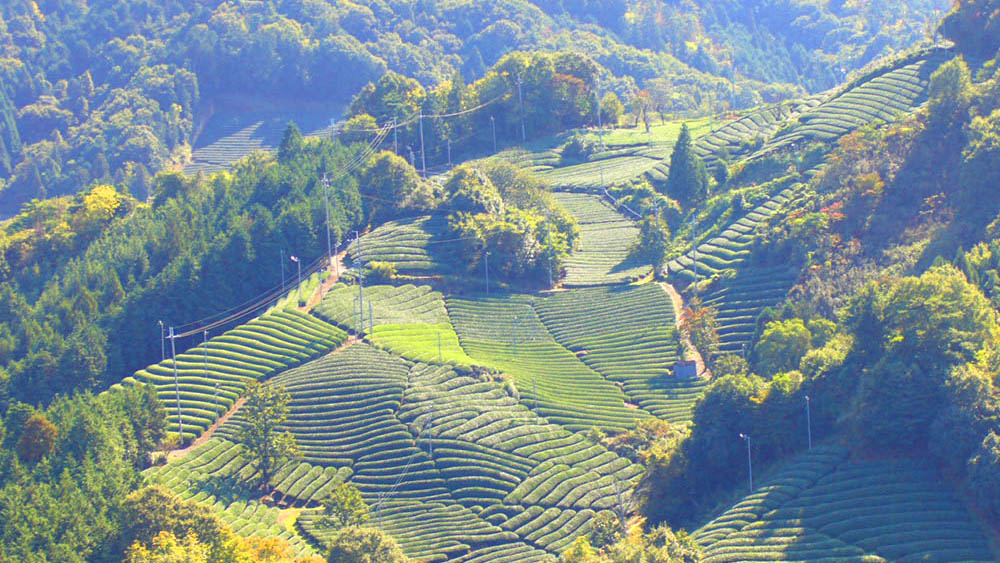
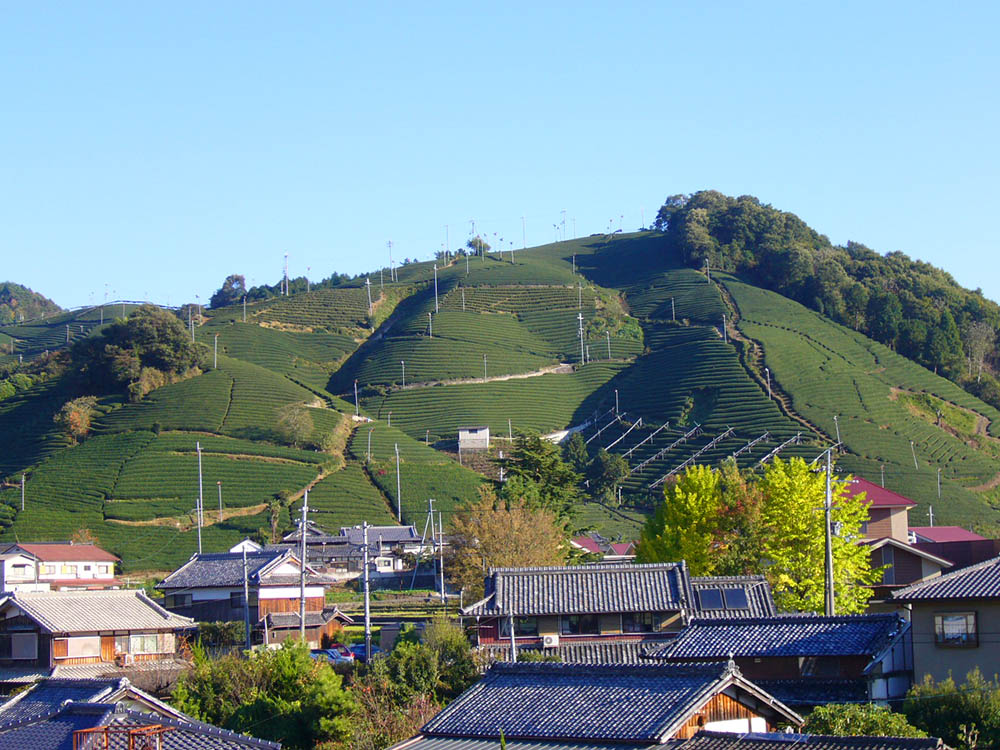
The green hills of Wazuka are covered with row upon row of neatly manicured tea plants—a testament to the town’s long history of tea cultivation. The town’s traditional tea farms create a distinctive landscape: Tea plants line the natural contours of hills and mountainsides, tall poles scattered throughout the fields are topped with fans that circulate air and prevent frost damage, and lengths of dark shade cloth are spread out to protect the leaves from direct sunlight. The landscape bustles with activity as the farmers work the fields from season to season, picking, pruning, and tending the plants.
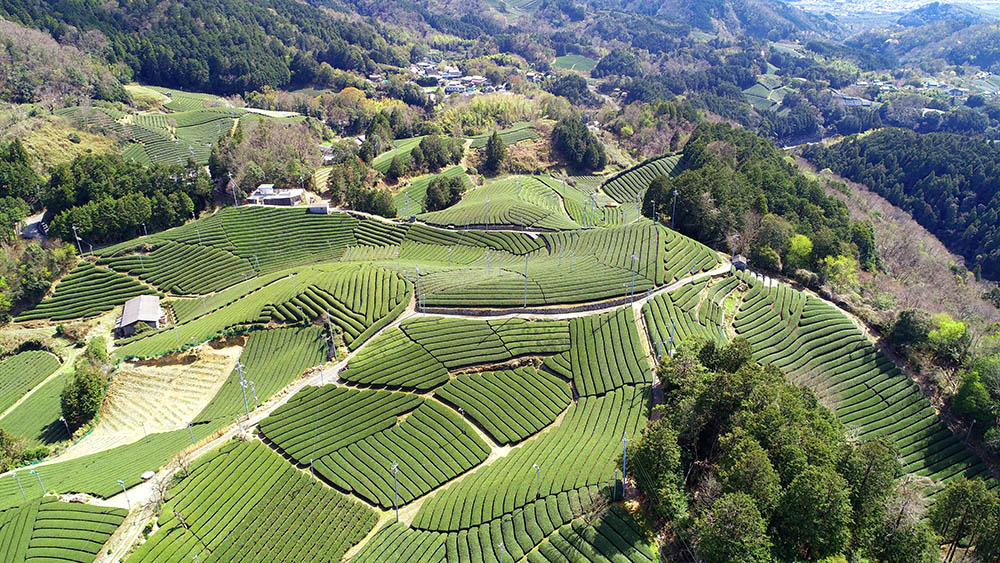
As of 2020, approximately 412 hectares (1,018 acres) of land in Wazuka are being used for tea cultivation, producing approximately 1,100 tons of rough tea leaves per year. Of the many tea plantations that blanket the hills around the town, four areas are particularly well-known for their landscapes, each offering a unique visual experience.
Ishitera Tea Plantation
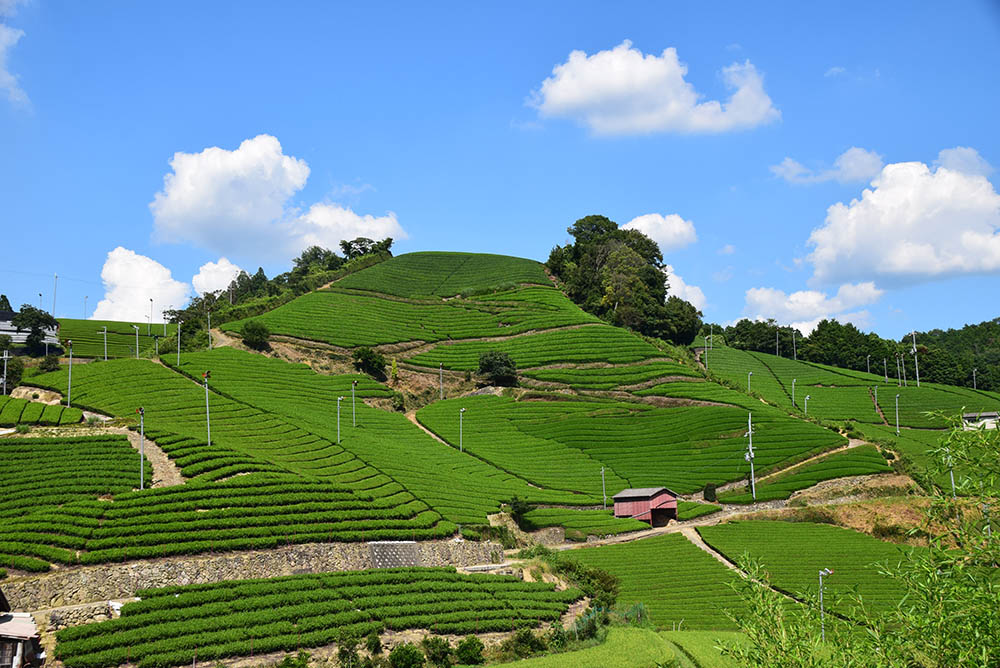
The best-known cultivation area is Ishitera in southwestern Wazuka, where the verdant tea-covered hills reach toward the sky. When Kyoto Prefecture established the Scenic Asset designation to promote and protect landscapes representative of an area’s unique culture, Ishitera became the first location to receive the title.
In late March, the cherry trees that border the Ishitera Tea Plantation brighten the scenery with layers of soft pink. The best time to view the area in a fully green state is in spring, before the farmers start covering their first-flush harvest with shade cloths. In summer, the harvesting of various types of tea at different times creates a patchwork effect in the fields: some plants are covered with cloth, while others are trimmed or awaiting picking. Autumn brings a few warm colors to the trees and shrubs on the paths between the fields, while winter snows can transform the rows into long, tidy white mounds.
Visitors who wish to enjoy a delicious meal or tea-themed sweet while taking in the sights may do so at the Dan Dan Café by the viewing point.
Shirasu and Erihara Tea Plantations
Kamatsuka Tea Plantation
Wazuka Tea
The History of Tea Cultivation in Wazuka
Tea cultivation in Wazuka is thought to have started in the early thirteenth century, shortly after tea seeds were brought to Kyoto from China by the influential Zen master Eisai (1141–1215). According to legend, Eisai gave seeds to Myoe (1173–1232), the head priest of Kosanji Temple, who gifted seeds in turn to the priest Jishin of Kaijusenji Temple. Jishin cultivated these seeds at the base of Mt. Jubuzan in Wazuka. Records from the late sixteenth century reference a tea field planted in the Harayama area of Wazuka that was used for private tea production. Though the cultivation methods used were still quite rudimentary, Wazuka’s reputation for tea can be dated back to this point.
Wazuka’s history as a center of tea production becomes clearer in the Edo period (1603–1867). In 1734, Wazuka tea was listed on a shogunate document ranking high-quality regional products. Some years later, a method was popularized for making sencha, a type of whole-leaf tea processed by steaming and drying while rolling instead of pan heating and air-drying in the then–traditional manner. The number of farmers specializing in sencha rose as this method spread, and the tea industry in Wazuka expanded even further. Sales records indicate that by the late nineteenth century, Wazuka tea was even being shipped to international ports like Yokohama and Kobe for sale abroad.
Tea produced in Wazuka was often labeled as “Uji tea” because of its location near the larger and better-known tea-producing region of Uji. Today, approximately 49 percent of the “Uji tea” grown in Kyoto Prefecture is actually produced in Wazuka. For centuries, the town’s economy and community have revolved around the many tea plantations that cover the surrounding hills.
Growing Conditions in Wazuka
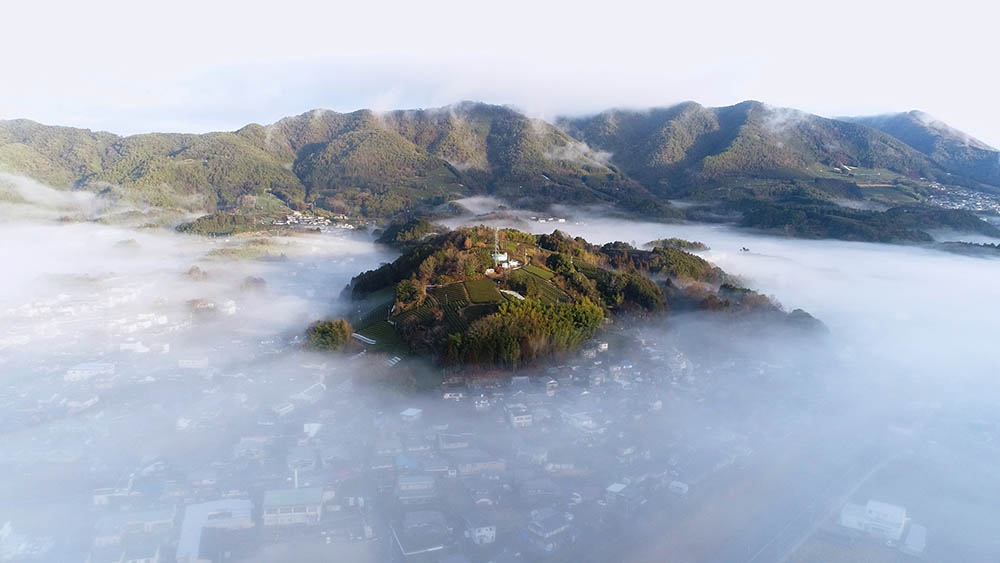
The geography and environmental conditions in Wazuka make the town ideal for cultivating tea. Crisp, cool air passes over the gentle hills and dense forests, and the flow of the Wazuka River provides nourishing water and generates mists that form when the temperature changes between night and day. These mists shield the tea plants from overexposure to the sun, keeping the leaves soft and preventing loss of flavor. The steep slopes of the tea fields help assure that the soil retains adequate moisture and has good drainage. It is this rich environment that made Wazuka so valued as a shoen (agricultural estate) in centuries past, when it was administered by powerful entities such as Kofukuji Temple in Nara, Kitano Tenmangu Shrine in Kyoto, and the imperial household.
Today, approximately 412 hectares (1,018 acres) of land in Wazuka are used for tea cultivation, producing some 1,100 tons of unrefined tea (aracha) per year. Around 200 farmers harvest the tea leaves, which are sent to 100 processing facilities.
Characteristics of Wazuka Tea
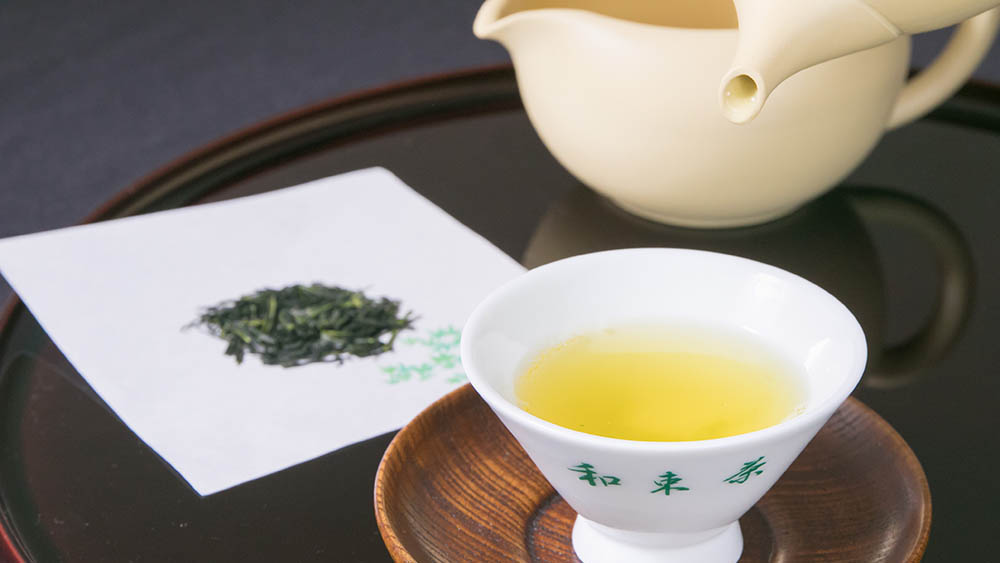
Wazuka is known for primarily producing sencha, a type of tea cultivated in direct sunlight until it is shaded just before the first or second harvest period when the leaves are tender and rich with nutrients. The quality of tea is evaluated based on four criteria: shape, color, aroma, and flavor. Compared to tea produced in other regions, Wazuka tea is said to possess a fresh fragrance, and the taste balances notes of both sweetness and umami. When the leaves are lightly steamed, the finished drink brews to a light golden green.
In recent years, Wazuka farmers have begun producing large amounts of tencha, the type of tea that becomes matcha powder when ground. Tencha is well-suited for use in foods where a green-tea element is desired. The next time you have matcha ice cream, bottled tea, a matcha frappe, or a matcha-flavored sweet, you may be enjoying the high-quality tea produced in the scenic fields of Wazuka.
Wazuka Tea Processing Facility
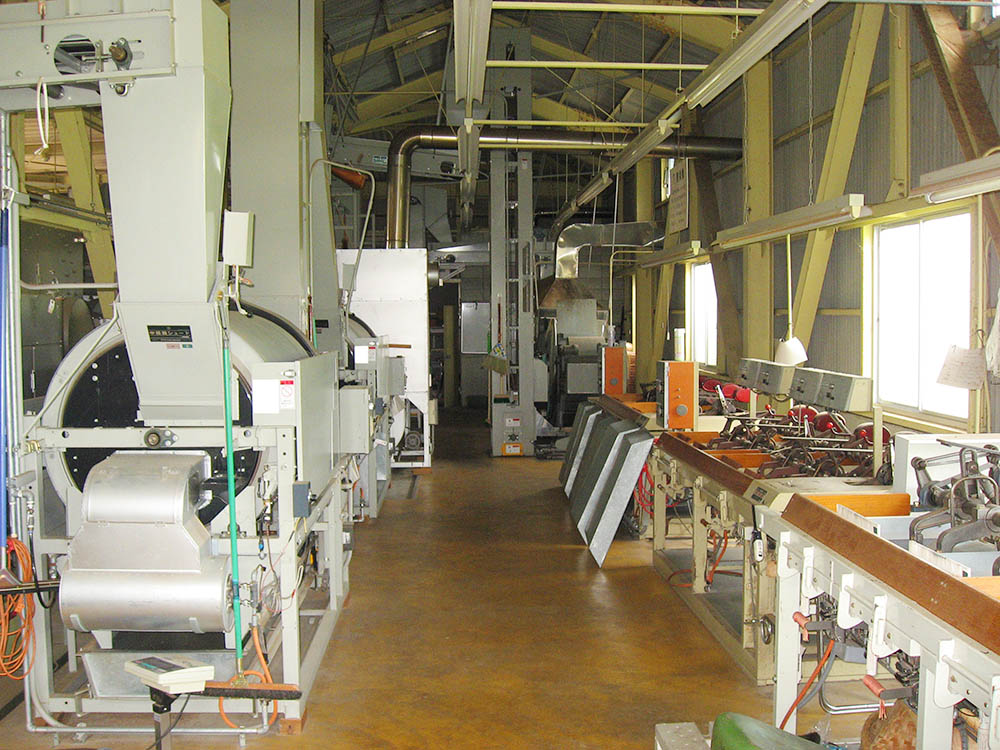
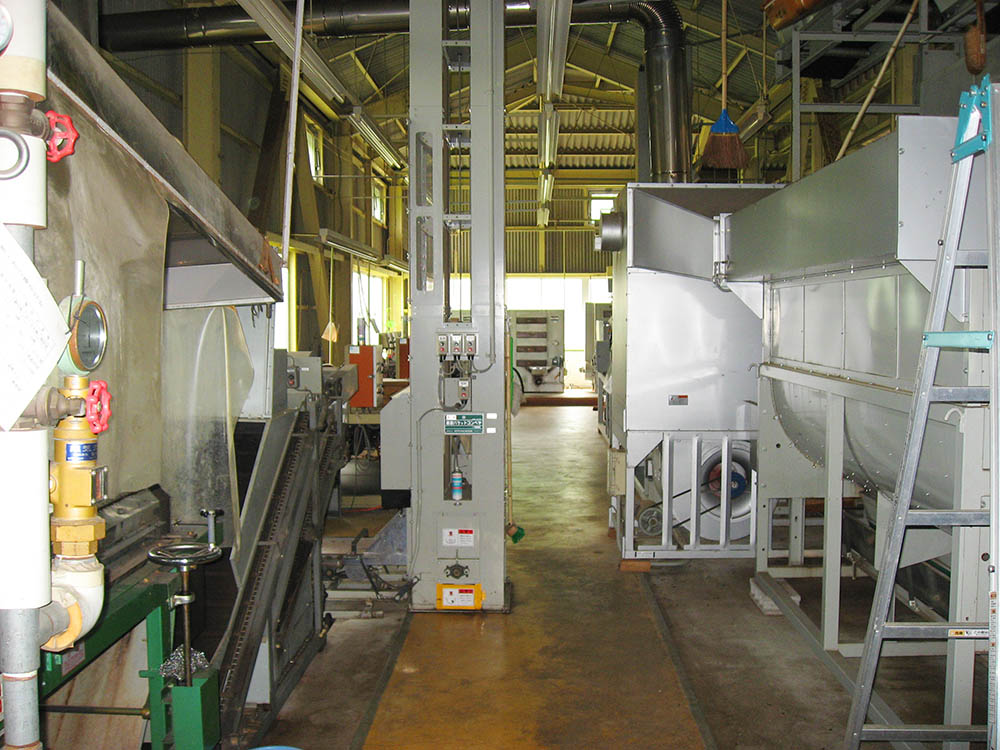
After Wazuka farmers gather the season’s tea harvest, they bring the fresh green leaves to processing facilities, where they are transformed into the tea enjoyed by consumers worldwide. The same leaves can be used to produce different types of tea—green tea, oolong tea, and black tea, for example—depending on how they are processed. In Wazuka, the tea leaves are primarily processed as sencha, the most popular type of green tea consumed domestically. This once involved time-consuming and labor-intensive hand rolling, but the majority of farmers now rely on machines for processing.
Though the process varies slightly depending on the producer and the type of tea, the Wazuka Tea Processing Facility uses machines to carry out the following steps:
Steaming
Rolling
Drying
Wazukacha Café and Wazuka no Sato Cultural Exchange Station
Wazukacha Café
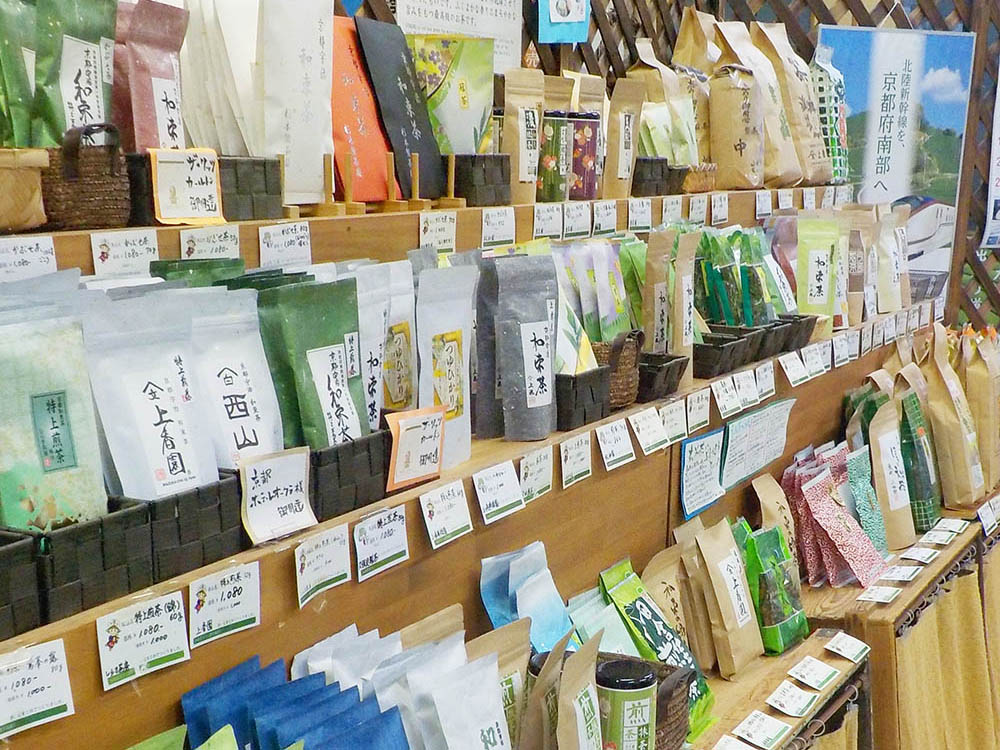
This combined café and shop stocks approximately 300 varieties of carefully selected teas from over 30 tea producers based in Wazuka. The products are color-coded to help shoppers identify the various types of tea, which include Wazuka-style sencha (whole-leaf green tea), kabusecha (green tea made from a plant that has been moderately shaded to produce a milder taste), gyokuro (an even finer green tea grown in heavy shade), kukicha (a tea blended with stems and twigs), genmaicha (brown-rice tea), hojicha (roasted green tea), and wakocha (Japanese black tea). The walls display useful signs in both English and Japanese that describe the characteristics and flavors of the teas and how best to brew them. The shop also sells various craft items and implements for tea brewing.
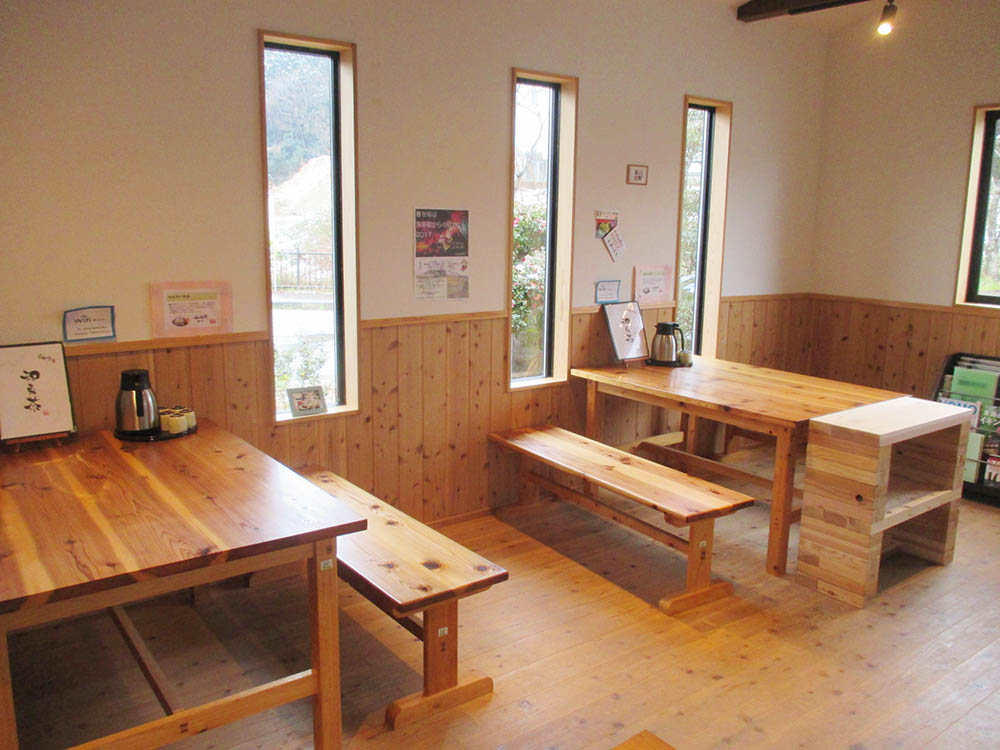
The Wazukacha Café serves meals and sweet snacks, and visitors can order tea-flavored soft-serve ice creams and drinks to go. The café’s specialty is green-tea soba noodles served with hojicha-flavored rice and a small, tea-simmered side dish; sweet options include tea-flavored zenzai (red-bean soup), tea-flavored dango (skewered sweets made with glutinous rice flour), pudding, and more.
Reservations for the nearby Tenku Café, a hilltop teahouse with a view of the surrounding tea fields, can be arranged at the Wazukacha Café. Bicycle rentals, tea tastings, tea-brewing classes, and matcha art experiences can also be booked here.
Wazuka no Sato Cultural Exchange Station
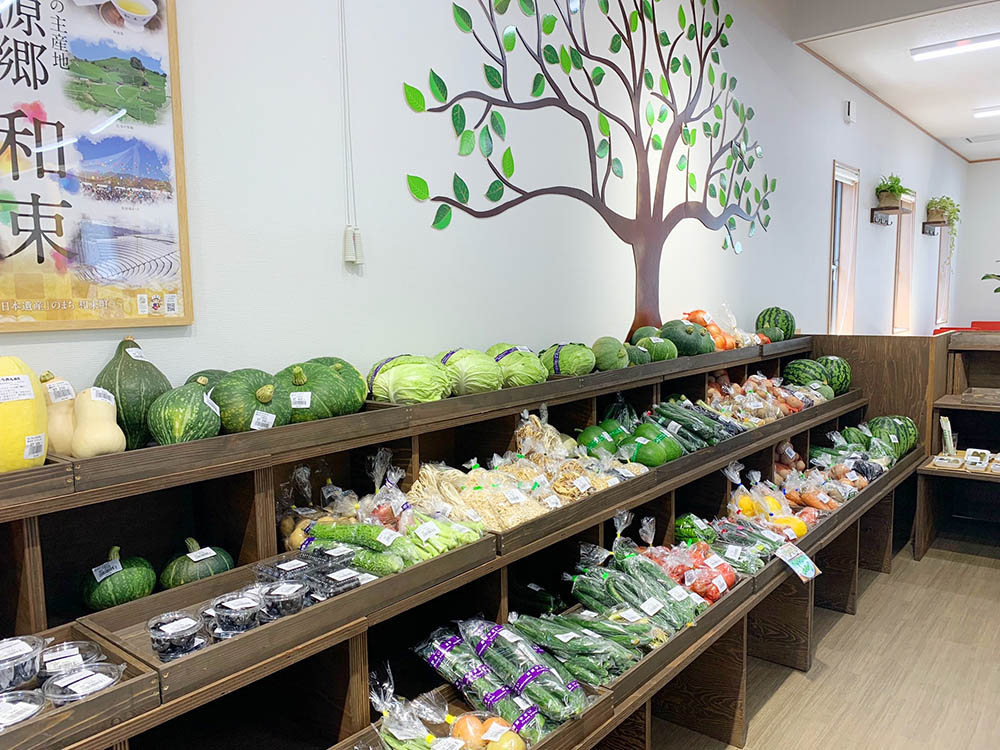
Wazuka no Sato is a farmers’ market and community gathering place that opened in 2021 to provide a space for residents and tourists to interact. The facility hosts seasonal events, showcases locally made crafts and cuisine, and gives visitors the chance to try classic regional foods. Along with useful cooking staples such as rice, vegetables, tofu, sauces, eggs, konnyaku, miso paste, and dashi broth, the market features baked goods, handmade traditional Japanese sweets, bottled tea, snacks such as green-tea-flavored potato chips, and various handicrafts and souvenirs.
Two large tables at the back of the building provide a place to sit and relax. Visitors can order food, drink complimentary cups of tea, and browse photo albums featuring seasonal images of Wazuka. The permanent menu is limited to soft-serve ice cream and simple snacks, but more substantial plate lunches are offered on Tuesdays, and tamagokake gohan (a popular snack of white rice topped with fresh raw egg) can be ordered on weekends.
Wazuka Town Tourist Information Center and Green Slow Mobility Tour
Wazuka Town Tourist Information Center
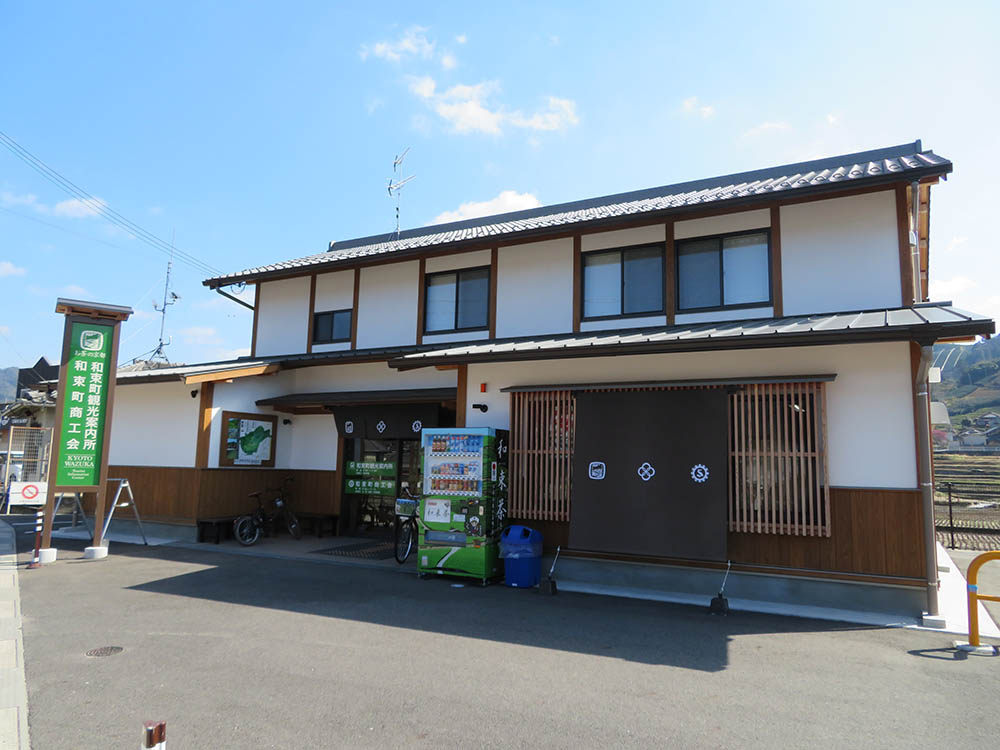
The Wazuka Town Tourist Information Center is an ideal first stop for visitors to obtain maps, pamphlets, and advice that may prove helpful when exploring Wazuka. The center is conveniently located on the town’s main road and offers a scenic view of the Kamatsuka Tea Plantation in the hills behind the facility. Inside, there are display racks full of information about sightseeing spots, experience workshops, restaurants, events, and more. Information is primarily in Japanese, but some sources are available in English, Chinese, and Korean. Staff are present at the counter to answer visitors’ questions. (Language assistance is available via machine translation apps.)
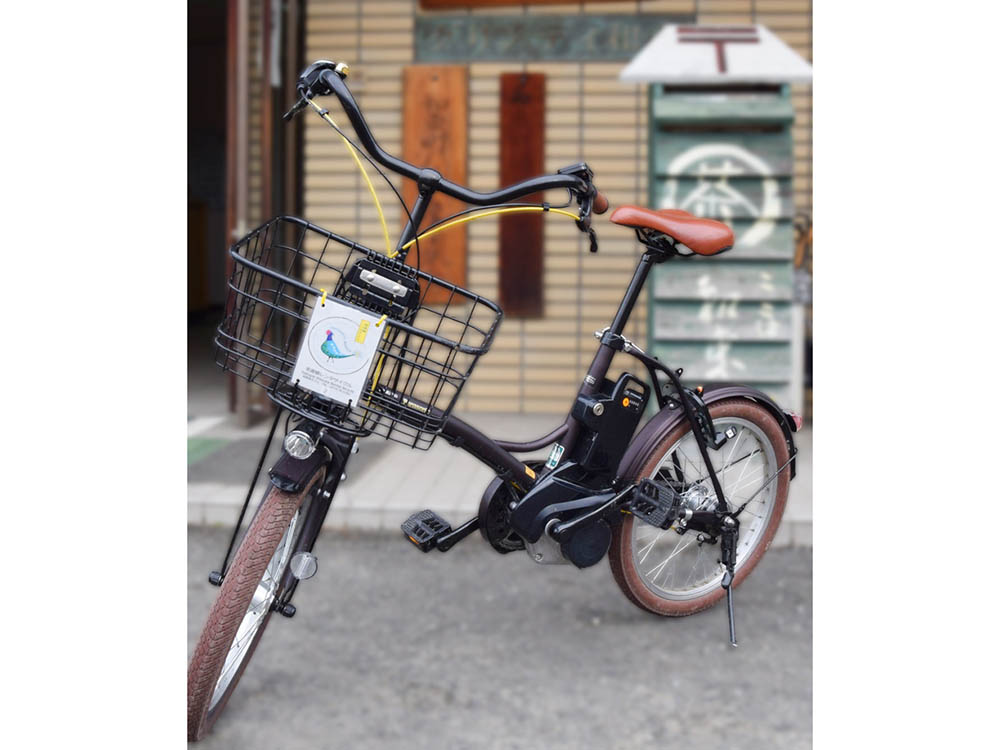
Bicycle rentals are available for those interested in getting a more intimate view of Wazuka’s green, tea-covered hills. Bikes can be rented between 9:00 a.m. and 4:30 p.m.; the cost is ¥1,100.
The center has a small shop that sells locally grown green tea and tea products. Some of the goods, including the tote bag and tenugui cloth, are exclusive to the Wazuka Town Tourist Information Center.
“Guchamo” Green Slow Mobility Tour
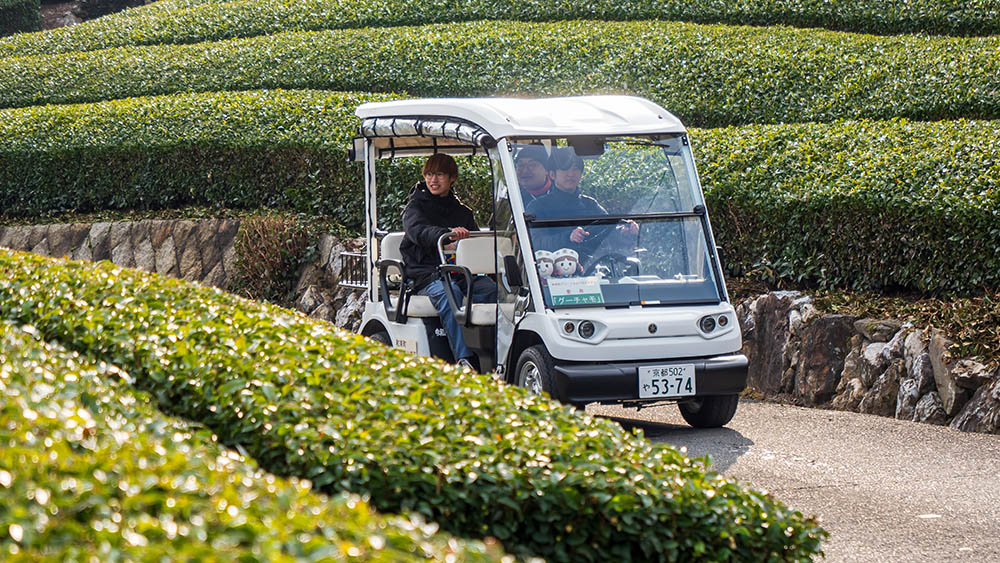
The Wazuka Town Tourist Information Center is the starting point for one of Wazuka’s environmentally friendly tourism initiatives: the Green Slow Mobility Tour. This tour takes visitors to the famous Ishitera Tea Plantation area and back in an eco-friendly vehicle driven by a knowledgeable guide who will explain the history of Wazuka, the characteristics of Wazuka tea, and the work involved in cultivating the plants throughout the year. Tour guests can visit local shops that are off the beaten path, depending on the course. The electric utility vehicle—nicknamed Guchamo for the first syllables of the Japanese words for “green,” “tea,” and “mobility”—carries tour guests along the narrow roads that wind through the tea fields, providing a close-up look at the tea plants and scenic views of ancient burial mounds and the surrounding landscape.
Reservations may be made by phone (Japanese only) in advance or on the day if there is availability. Tours last approximately 70 minutes and run from March through November on Saturdays, Sundays, and holidays. Four time slots are available each day: 9:40 a.m. to 10:55 a.m., 11:10 a.m. to 12:25 p.m., 1:30 p.m. to 2:45 p.m., and 3:00 p.m. to 4:10 p.m. The Green Slow Mobility Tour costs ¥1,000 for adults and ¥500 for children (elementary school or younger). Visitors who come to Wazuka via Nara Kotsu bus receive a discount, so please present proof of boarding before payment. After the tour is finished, each visitor receives a small participation gift. As there are only two Guchamo vehicles, the tour can take a maximum of seven guests on Sundays and four on Saturdays and holidays.
Wazukaso Inn
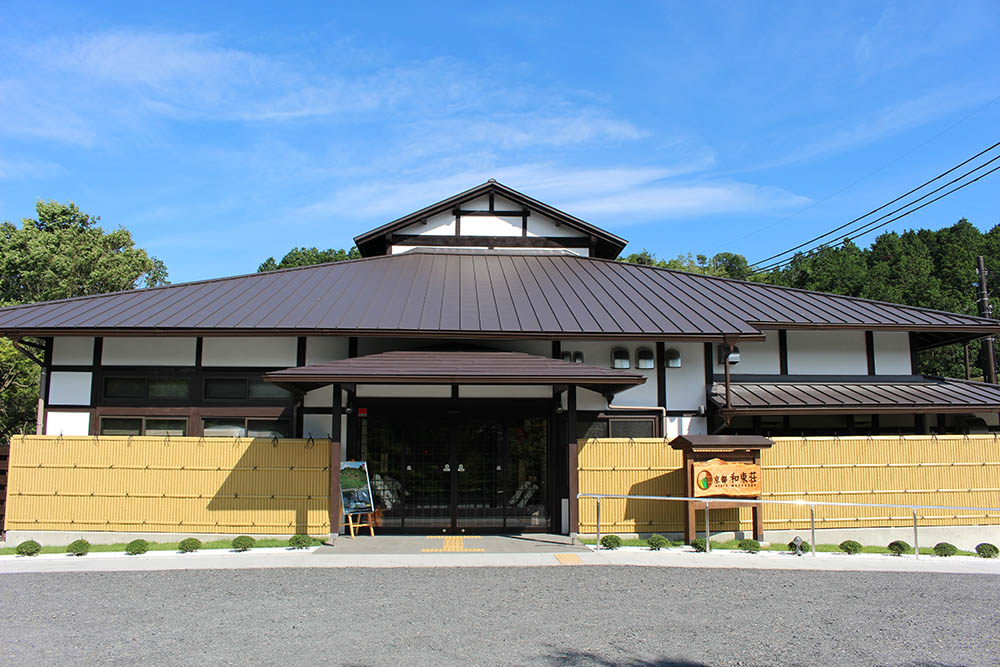
The Wazukaso Inn is set amid scenic tea fields and is one of the few overnight accommodations available in Wazuka. The central location allows guests to explore the town at a leisurely pace without needing to return to a distant hotel at the end of the day.
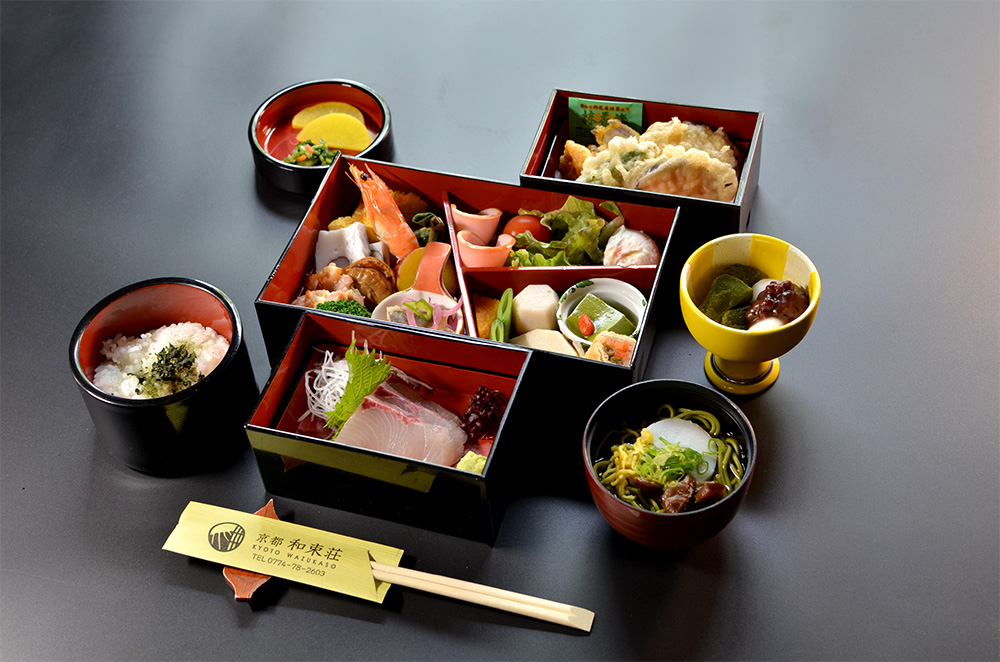
Guests at the inn can savor aspects of tea that engage all their senses. The course meals utilize tea flavors in a variety of ways, the rooms contain tea-leaf incense burners, and the communal baths are infused with aromatic tea scents. The inn affords striking views of the lush tea fields that surround the property, and staff helpfully explain tea characteristics and brewing techniques. A popular highlight of the inn is the distinctive star-filled sky on clear nights, made possible by the expansive landscape and the lack of big-city light pollution. The changing seasons enhance the views from the inn, including cherry blossoms and fall colors on the mountainside.
The main building has four rooms: two with Japanese-style futons and two with Western-style beds. The annex has three rooms for larger groups. Booking well in advance is recommended to ensure availability on desired dates.
The inn can be reserved for course lunches and dinners, banquets, events, barbeques, and activities such as sports training and youth camps. Please make reservations at least three business days in advance for dining.
Tea Culture Experiences in Wazuka
Tea-Field Walking Tour
Time: 40–90 mins.
Enjoy the scenic views of the tea fields in Ishitera and Shirasu while a knowledgeable guide explains the history and practice of tea production in Wazuka. A range of courses are available depending on the desired length of time and specific interests. Please specify any requests when inquiring about availability.
Tea Steeping Class
Time: 1 hr.
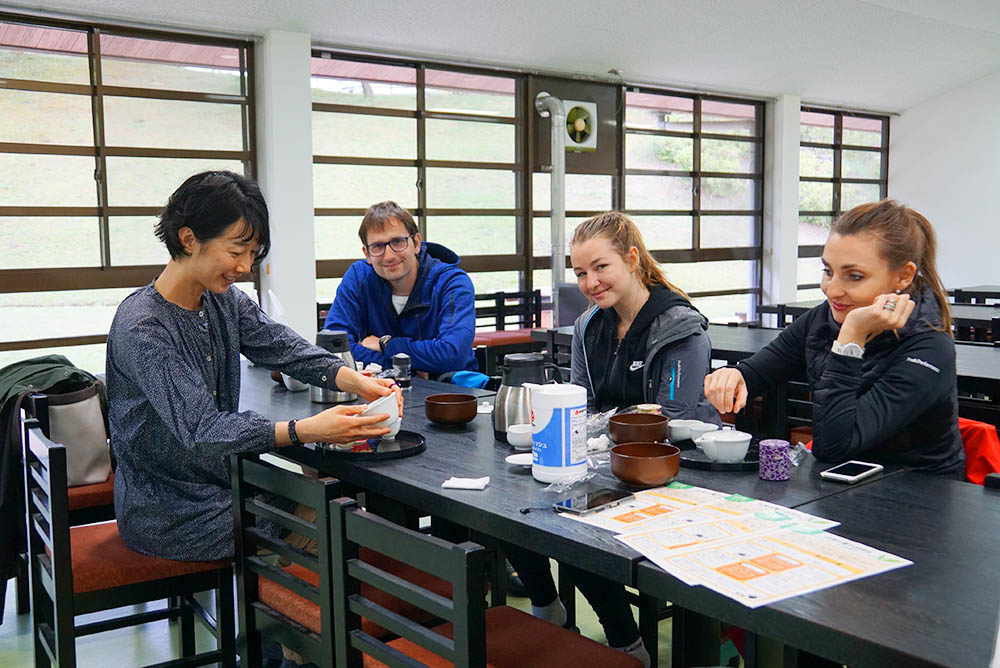
This class is recommended for visitors who are interested in bringing tea home as a souvenir but are unsure how to best prepare it. An instructor details the proper way to steep sencha tea to bring out the best aroma and balance the flavors.
Tea-Leaf-Picking Experience
Time: 40 mins.
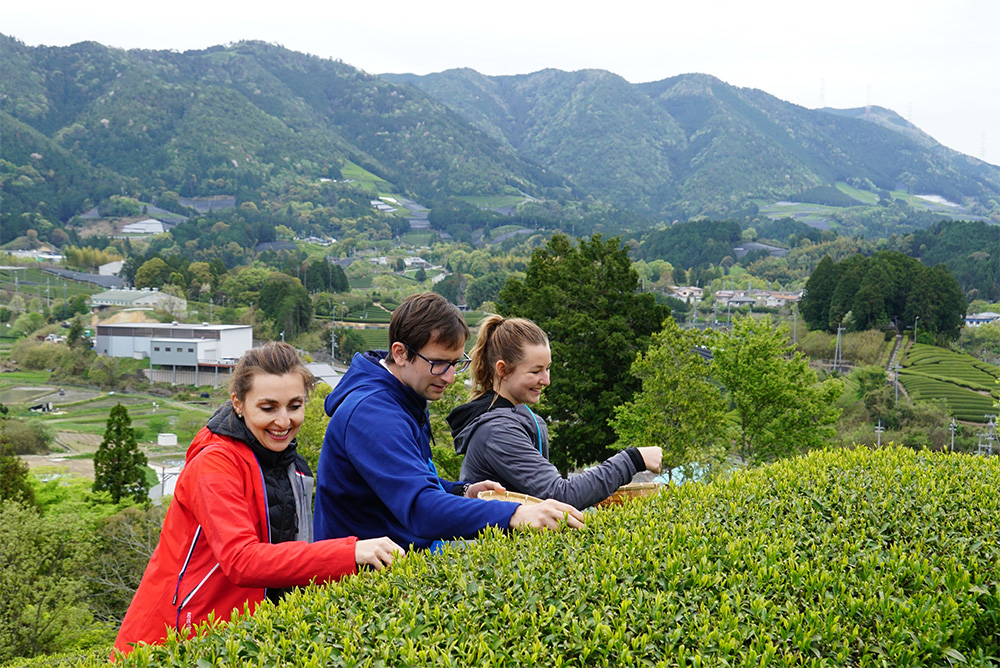
This fun and educational experience—one of the most popular in Wazuka—takes participants into the tea fields to learn how to harvest fresh green tea leaves by hand. The course is only offered in May, June, and October when the tea is ready for harvest. Visitors gain firsthand experience and knowledge of the hard work involved in traditional tea production.
Chakabuki Tea Tasting Game
Time: 2 hrs.
Those with a sophisticated palate may enjoy chakabuki, a game in which players compete to correctly guess the type of tea they are drinking. This game is said to have begun during the Song dynasty (960–1279) in China, when players would try to identify the regional origin of tea leaves and the water used for steeping them. In Wazuka, players presented with five rounds of tea attempt to identify each one by taste, aroma, and color.
Nomikurabe Tea Tasting
Time: 30 mins.
The nomikurabe experience allows participants to sample and compare three different types of tea. It is a brief and enjoyable introduction to the many types of tea available in Wazuka.
Sado Tea Gathering
Time: 1 hr.
In this course, participants will gather in a tea room or other indoor space to experience a tea gathering (or “tea ceremony”), learn how to prepare a bowl of matcha, and listen to an instructor speak about the various customs involved in the practice.
Matcha Art Experience
Time: 1 hr.
While listening to the fascinating history of Wazuka tea production and enjoying a delicious sweet, participants draw freehand or use stencils to create artistic designs on the surface of their drink using concentrated green tea.
Matcha Whisking Class
Time: 1 hr.
Under the instruction of an expert, participants learn to make delicious matcha—a skill they can continue to use long after their trip to Wazuka.
Green Tea Dango-Making Class
Time: 1 hr.
The distinctive flavors of Japanese tea are often enjoyed in dango, a type of sweet made from rice flour and served on skewers. In this class, participants will learn how to make dango flavored with sencha, hojicha, and matcha.
Tea-Soap-Making Class
Time: 1 hr.
Participants make their own bar of natural soap with green tea; the soap may be taken home as a souvenir. The materials involved are suitable for handling by all ages.
Wazuka Tenmangu Shrine
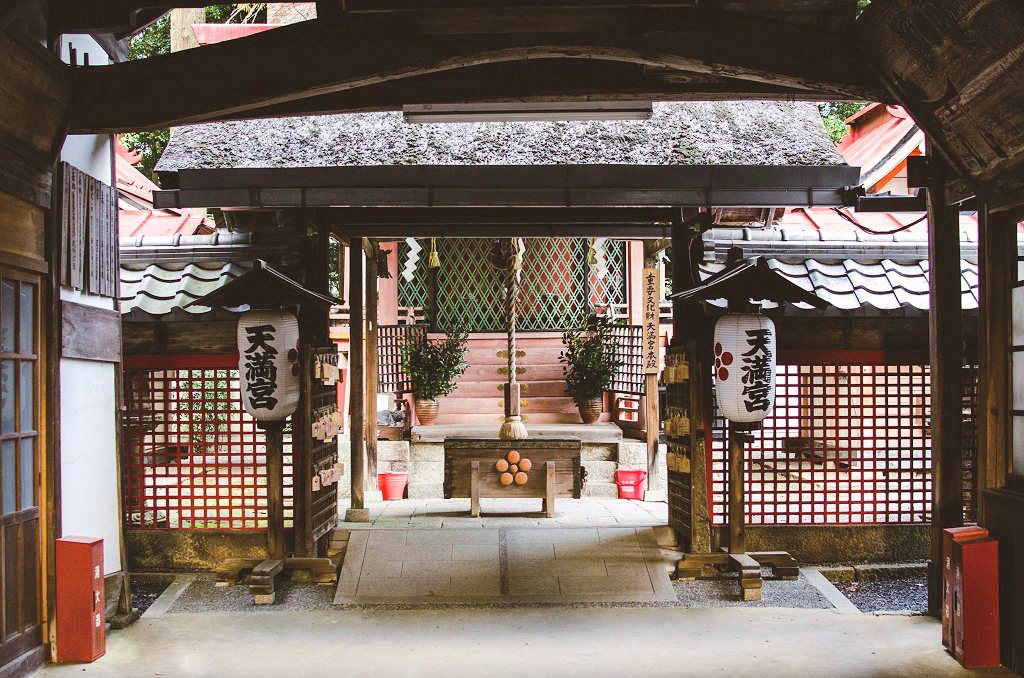
History
Though the exact founding date of Wazuka Tenmangu is unknown, one legend says it was founded in the late tenth century when Emperor Enyu (959–991) enshrined a painting of Sugawara no Michizane (845–903), the man who was posthumously deified as Tenjin. Michizane was an accomplished academic, poet, and high-ranking statesman who was exiled by his political rivals. After his death, natural disasters and other misfortunes led to the belief that the disgraced statesman had become a vengeful spirit. Eventually, however, he was thought to have been pacified when his achievements in life were honored by his deification.
Some scholars believe Wazuka Tenmangu exemplifies how culture and religion from influential cities spread to countryside areas via agricultural estates (shoen). In the tenth century, Wazuka was a shoen of Kofukuji Temple in Nara, and a shrine was founded for that temple’s guardian deity, Kasuga Myojin. In the twelfth century, Wazuka became a shoen of Kitano Tenmangu, the head Tenjin shrine in Kyoto, which would have promoted Tenjin worship instead; this may have led to the founding of Wazuka Tenmangu.
Shrine Grounds
The main sanctuary was constructed in 1348 in the nagare-zukuri architectural style, which is characterized by an asymmetrical gabled roof. It is a designated National Important Cultural Property. Statues of oxen, sacred messengers of the deity Tenjin, are placed around the sanctuary.
Large votive tablets—the oldest dating to 1856—are hung in the prayer hall in front of the main sanctuary. The sanctuary is flanked by four small subsidiary shrines. Three are dedicated to commonly worshiped deities, but Goryo Shrine, to the immediate right of the sanctuary, enshrines a figure unique to Tenjin worship: an elderly priest named Watarai no Haruhiko, who remained loyal to Sugawara no Michizane despite his exile.
On the south side of the grounds is a small shrine dedicated to Ebisu, a deity of prosperity and commerce. On the other side of the vermilion bridge are Umemiya Shrine, Kumano Shrine, and Kasuga Shrine, the latter a designated Cultural Property of Kyoto Prefecture. The presence of subsidiary shrines on the grounds is a tradition that allows pilgrims to pray to many popular deities all in one place.
Autumn Festival
Shohoji Temple
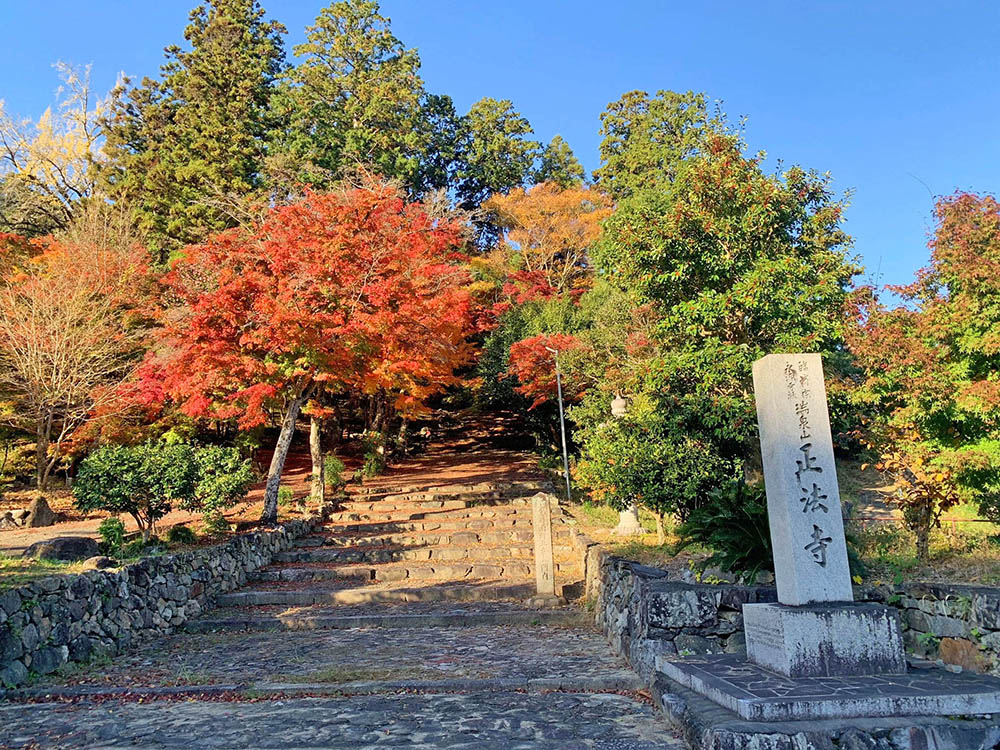
History
Temple legend states that Shohoji was founded in 744 near the tomb of Prince Asaka (728–744) to memorialize the young prince. The founder, Gyoki (668–749), was a prominent monk who travelled the country spreading Buddhism and supporting public works projects. Though the temple was once a large mountaintop complex, it fell into disrepair during a period of civil unrest in the early fourteenth century.
In the mid-seventeenth century, Shohoji was reconstructed on a smaller scale at the foot of the mountain by the Tamura family, then lords of Bukkoji Castle. At their request, the head priest of Eigenji Temple, Nyosetsu Mongan (1601–1671), revived Shohoji as an Eigenji school temple, part of the Rinzai sect of Zen Buddhism. One of the temple’s important sponsors was Tokugawa Masako (Tofukumon’in, 1607–1678), who had been granted Wazuka estate lands upon her marriage to Emperor Go-Mizuno’o.
Temple Grounds
The main gate and the Buddha Hall are designated Tangible Cultural Properties of Kyoto Prefecture. The gate was originally donated by Tokugawa Masako from the Kyoto Sento Imperial Palace; the Buddha Hall can be dated to the mid-seventeenth century reconstruction. Inside the Buddha Hall is a seated statue of Amida Buddha that was likely made in the Edo period (1603–1867).
To the right of the Buddha Hall is a small hall for the worship of a deity important to the Koshin folk religion, which combines Taoism, Shinto, Buddhism, and other traditions. Next to the Koshin Hall is a relatively new set of twelve round-faced statues of the bodhisattva Jizo, each one posed with a different Chinese zodiac animal. Up a small flight of stairs is a Jizo Hall containing another statue of Jizo, who is venerated as a guardian of travelers and children.
The main hall is generally closed to the public, but those who wish to enter may inquire with temple staff. A statue of Sei Kannon, the bodhisattva of compassion, is enshrined within. Tokugawa Masako is said to have prayed to this statue in her palace quarters before it was given to Shohoji.
Seasonal Beauty
Wazuka Travel Guidebook
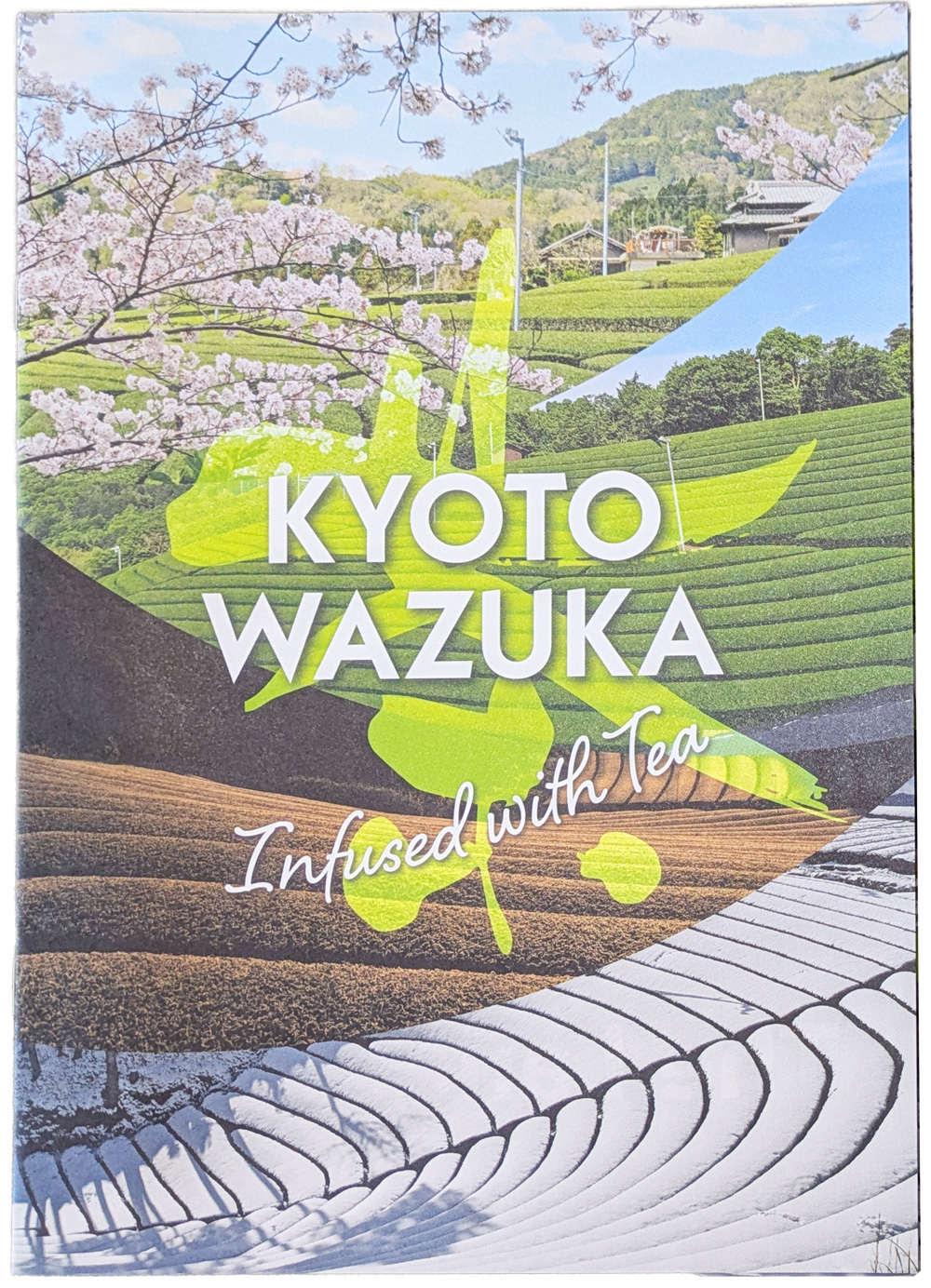
View our tourist brochure, "KYOTO WAZUKA ~ Infused with Tea ~," also available in PDF format.